
I'm going to be straight with you: AI headshot generators have gotten really good. Like, genuinely impressive. The technology has improved so fast that what looked obviously fake two years ago now looks... pretty convincing at first glance.
So when a business owner asks me, "should I just use AI for our team headshots?" — I don't roll my eyes or give them a sales pitch about why real photography is sacred. I give them an honest answer.
Because the honest answer isn't "AI is garbage." It's more nuanced than that. And I think you deserve the full picture before you decide.
How AI Headshots Work
If you haven't tried one yet, here's the basic process:
- You upload 10-20 selfies or casual photos of yourself
- The AI trains a model on your face
- It generates dozens (sometimes hundreds) of headshot-style images with professional lighting, backgrounds, and styling
- You pick your favorites
Services like HeadshotPro, Aragon AI, and others charge anywhere from $29 to $75 per person and deliver results in under an hour. That's roughly 80-90% cheaper than professional photography, at roughly 100x the speed.
On paper? That's a no-brainer. In practice? It depends entirely on what you need the headshots for.
Where AI Headshots Work Fine
I'm not going to pretend AI is useless. For certain use cases, it's genuinely practical:
Internal company directories. If the photo is going in an internal Slack profile or an employee directory that only your team sees, AI is fine. Nobody's scrutinizing the lighting consistency of your internal org chart.
Placeholder photos for new hires. Your new marketing coordinator starts Monday and your website still shows "Photo Coming Soon" from the last three hires. An AI headshot fills the gap until you can schedule a real session.
Personal social media profiles. If you're updating your LinkedIn for a job search and don't want to use the cropped photo from your cousin's wedding, an AI headshot is a quick, inexpensive upgrade.
Testing a new brand or business idea. You're launching a side project and don't want to invest in professional photos until you know if it has legs. AI gives you something polished enough to test with.
For these uses? Honestly, go for it. I mean that. Not every situation requires a professional photographer, and pretending otherwise would be dishonest.
Where AI Falls Short
Here's where it gets more complicated — and where the limitations start to matter for businesses that care about their brand.
Team Consistency Is the Big One
This is the issue I see most often, and it's the one AI fundamentally cannot solve.
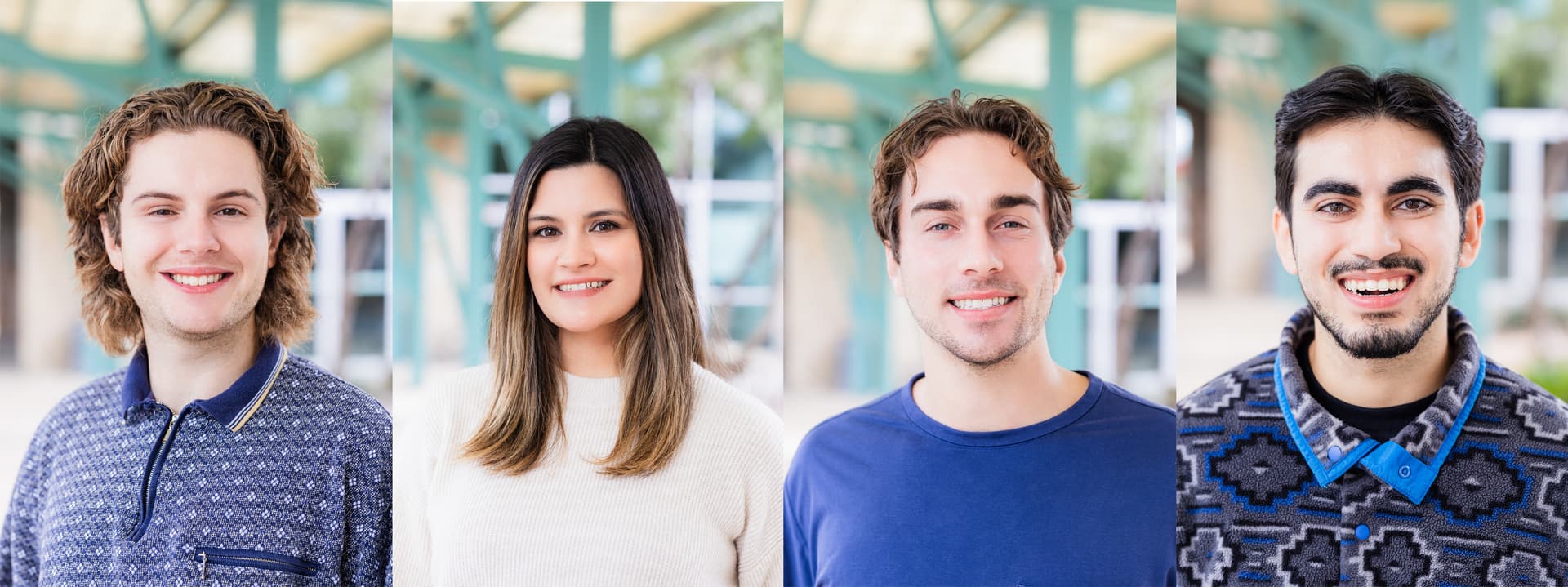
When a company books a headshot day with me, every person is photographed with the same lighting setup, the same background, the same color temperature, the same editing style. The result is a team page where 25 people look like they belong to the same company. Visual consistency signals professionalism — it says "we have our act together."
AI generates each headshot independently. Every person's image has slightly different lighting, a slightly different background tone, slightly different color grading. When you put 10 AI-generated headshots on a single page, it looks like 10 people went to 10 different photo studios. Some backgrounds are warmer, some cooler. Some have softer lighting, some harsher. The inconsistency is subtle but cumulative — and on a team page, it's noticeable.
For a team of 1-2? You might not notice. For a team of 10+? It starts looking disjointed. For a team of 25+? It's visually obvious that these photos weren't taken together.
The Uncanny Valley Problem
AI headshots have gotten good at generating realistic faces. But they haven't fully solved the small details that make a photo feel real:
- Skin texture looks slightly too smooth — like a permanent beauty filter
- Fabric and clothing details sometimes blur or distort in ways real photos don't
- Jewelry and accessories can get weird — extra earrings, merged necklaces, phantom watch reflections
- Hair is often the biggest tell, especially flyaways, edges, and the way hair interacts with a collar or shoulder
These aren't glaring errors. Your average person scrolling your website won't point at the screen and say "that's AI." But there's a growing awareness — especially in professional settings — of what AI-generated imagery looks like. And in industries where trust is your product (legal, healthcare, financial services, consulting), even a subtle whiff of inauthenticity can work against you.
As AI-generated imagery becomes more common, people are getting better at sensing when something looks off — even if they can't articulate why. Your clients may not point at the screen and say "that's AI," but the subtle uncanny quality registers. And in professional settings, that seed of doubt works against you.
No Environmental Context
AI generates a face against a digital background. It can't photograph you:
- In your actual office, with your actual team, surrounded by your actual work
- At a specific Austin location that says something about your brand
- With props, products, or environmental details that tell your professional story
- In motion, in conversation, in context
If your headshot is purely a face-against-a-backdrop, AI can approximate that. But if your brand photography needs to communicate who you are, where you work, and what it feels like to work with you — that requires a real camera, a real location, and a real photographer who knows how to use both.
Expression and Personality Are Formulaic
Every AI headshot generator produces the same general expression: slight smile, head tilted 10-15 degrees, "approachable professional" energy. It's pleasant and inoffensive — which is exactly the problem.
The headshots that actually stand out on a team page are the ones with real personality. The partner at the law firm who has a slightly mischievous grin. The startup founder who looks directly into the camera with zero pretense. The creative director whose photo has an edge to it.
That's what happens in a real session — I talk to you, I make you laugh, I catch the expression that is you, not the expression an algorithm thinks a professional should wear. AI can't do that because it doesn't know you. It knows what headshots generally look like, and it generates an average of all of them.
The Real Comparison
Here's what you're actually choosing between:
| Factor | AI Headshots | Professional Photography |
|---|---|---|
| Cost per person | $29-$75 | $80-$175 (team rates) |
| Turnaround | Under 1 hour | 5-7 business days |
| Team consistency | Poor — each generated independently | Excellent — same setup for everyone |
| Background matching | Inconsistent across team | Identical across team |
| Expression variety | Limited — formulaic poses | Natural — coached, candid, authentic |
| Environmental context | None — digital backgrounds only | Your office, your location, your brand |
| Retouching control | Automated (over-smoothed) | Custom per person (natural-looking) |
| Commercial usage rights | Varies by service | Full rights included |
| Group/team photos | Not possible | Included for teams of 11+ |
The Cost Gap Is Smaller Than You Think
AI's biggest selling point is price. And yes, at $29-$75 per person vs. $80-$175 per person, AI is cheaper.
But let's run the actual numbers for a 20-person team:
AI headshots: 20 people × $50 average = $1,000
- No team consistency
- No group photos
- No coaching or guidance
- No environmental shots
- Digital backgrounds only
Professional headshot day: 20 people × $110/person = $2,200
- Consistent lighting, background, and editing across all 20 people
- Group team photos included
- Wardrobe and posing guidance for each person
- On-location at your office (zero travel time for your team)
- Retouched, high-resolution files with full commercial usage rights
- Gallery delivered within 7 business days
The difference is $1,200 for a 20-person team. For a company that cares about brand consistency, that's not a savings worth celebrating — it's a sacrifice in quality that will have to be corrected for down the road.
For a 50-person team, the math shifts even further: $2,500 (AI) vs. $4,750 (professional at $95/person). A difference of $2,250 — for photos that will represent your company to every client, prospect, and recruit who visits your website for the next 1-2 years.
My Honest Take
Here's what I tell every business owner who asks me about AI headshots:
Use AI if:
- You're in a role where having your personality showing through in the photo isn't important
- You're applying for a job and need a new headshot now to fill the headshot slot on your resume template
- You need internal-only placeholder images
- Budget is genuinely the deciding factor and you're a team of 1-3
Invest in professional photography if:
- You have a team of 5+ and need visual consistency across your website
- Your industry relies on trust and credibility (legal, healthcare, finance, consulting, real estate)
- You want environmental or lifestyle headshots that show personality
- You plan to use the images for 1-2+ years across multiple channels
- You care about your team page looking cohesive and polished
- You want group photos alongside individual headshots
I'm not threatened by AI headshots. They serve a purpose, and I'd rather be honest about where they work than pretend every situation requires a professional photographer. That would be dishonest, and it's not how I operate.
But I've also seen what happens when companies try to build a team page with AI-generated headshots: it looks fine individually and disjointed collectively. And I've watched the same companies come back 6 months later to book a proper headshot day because the inconsistency bothered them more than they expected.
The question isn't "is AI good enough?" It's "good enough for what?"
For your internal Slack profile? Absolutely. For the website that represents your company to every client who's deciding whether to hire you? That's a different question — and usually, a different answer.
Setting Up a Headshot Day (If You Go the Professional Route)
If you decide professional headshots are the right move for your team, here's what the process actually looks like — it's simpler than most people expect:
- We pick a date and I come to your office. No coordinating 20 people to drive to a studio. I set up in your conference room, lobby, or wherever makes sense
- I send your team a prep guide with what to wear, what to expect, and how to show up looking their best
- Each person gets about 5 minutes — quick wardrobe check, a minute of conversation to loosen up, 2-3 minutes of shooting
- Proof gallery posted within 48 hours — each person views and selects their favorites
- Final retouched images delivered within 7 business days
Total disruption to your workday: about 2.5 hours for a 25-person team. People rotate through one at a time during natural breaks between meetings. Nobody's standing around waiting.
Considering a headshot day for your team? Let's set it up — I'll give you a transparent quote based on your team size and handle all the logistics.
Related:
- How Much Do Corporate Headshots Cost in Austin?
- Brand Photography & Company Headshots: The Real Guide
- View Branding Portfolio
- Branding Photography Pricing
Ready to elevate your brand? View Brand Photography Services | Get in Touch