
Here's a scenario I see all the time: a company invests in a brand photoshoot, gets a gallery of 200+ beautiful images back, uses maybe 15 of them once, and the rest sit in a Google Drive folder labeled "Brand Photos 2025" that nobody opens again.
That's not a photography problem. That's a planning problem.
The difference between a photoshoot that produces a few nice images and one that gives your marketing team months of usable content comes down to what happens before anyone picks up a camera. The planning, the creative brief, the model coordination, the shot list, the logistics—all of that unsexy prep work is what determines whether your investment actually pays off.
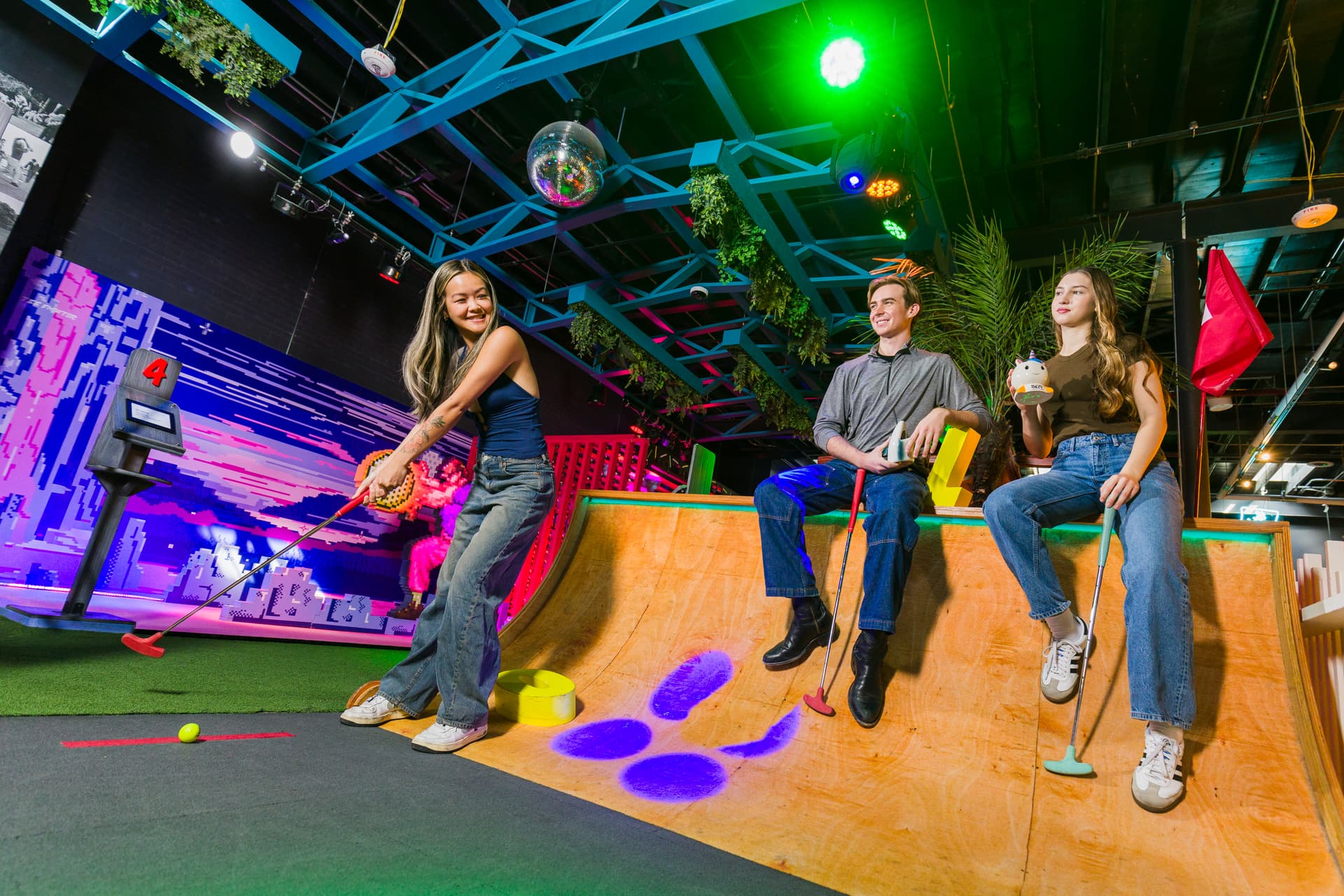
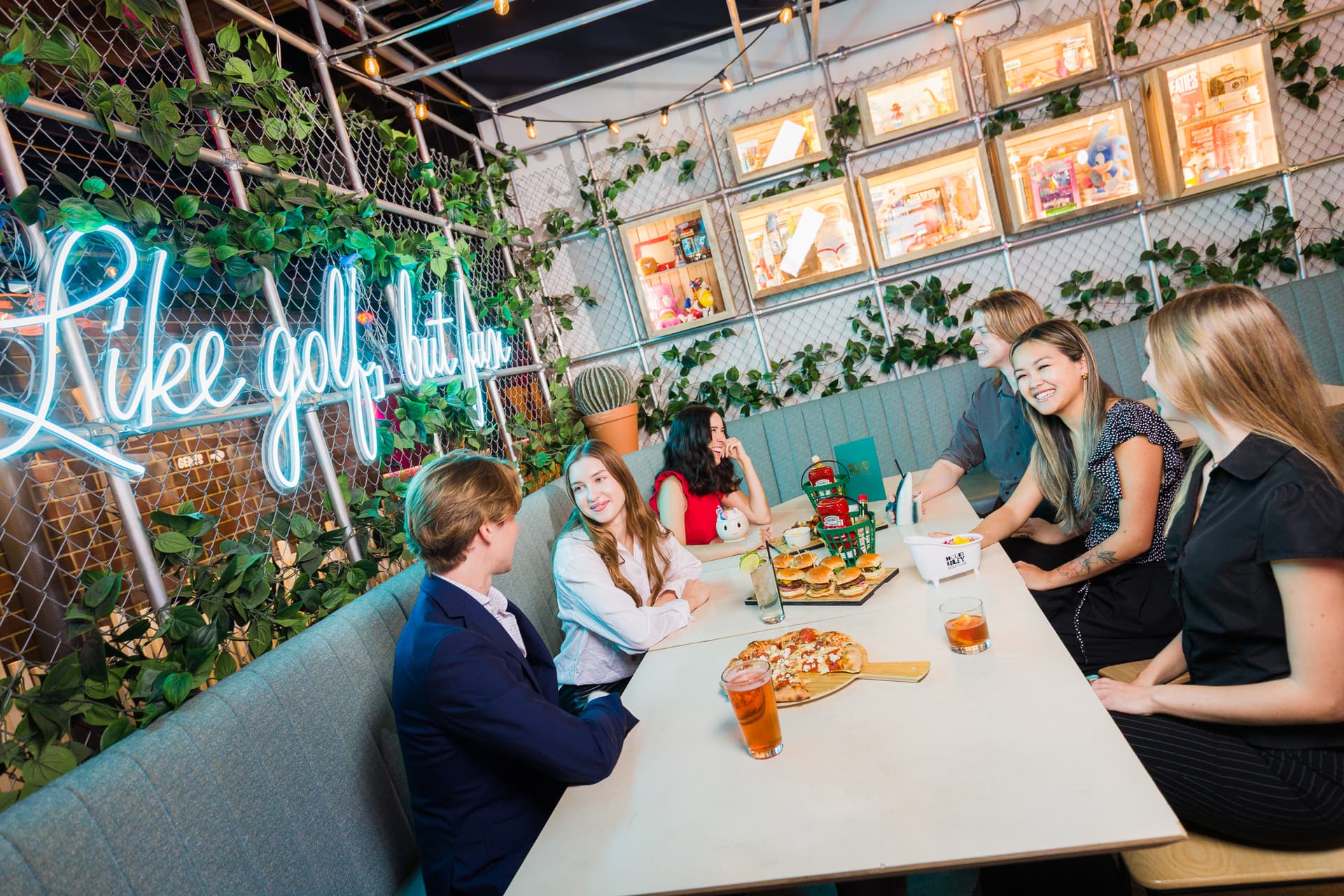
I've shot brand campaigns for companies across Austin, from colorful entertainment brands like Holey Moley Golf Club to tech startups, restaurants, and professional services firms. Here's everything I've learned about planning a brand photoshoot that delivers content your team will actually use.
Step 1: Start with the End, Not the Beginning
Before you think about locations, models, or props, answer one question: where are these photos going?
This sounds obvious, but most companies skip it. They book a photographer, show up, take some cool photos, and then figure out what to do with them afterward. That's backwards.
Start with your marketing calendar and work backward:
- Website pages that need images — Which pages are launching or getting refreshed? What specific shots do those pages need?
- Social media content plan — How many posts per week? What formats? (Instagram feed, Stories, Reels covers, LinkedIn posts)
- Advertising needs — Are you running paid campaigns that need creative? What sizes and orientations?
- Email marketing — Headers, inline images, promotional graphics
- Print materials — Brochures, menus, signage, event collateral
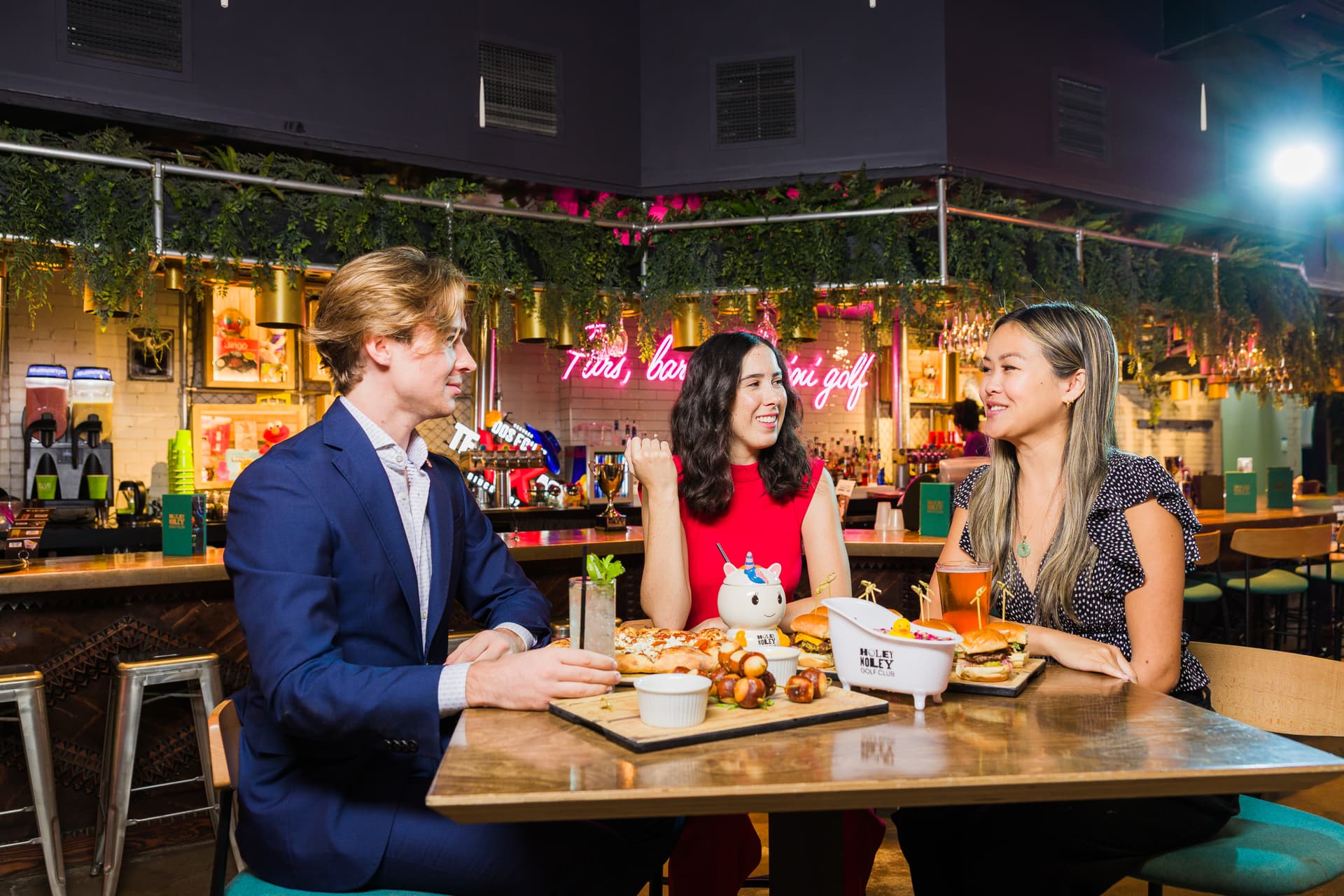
When I worked with Holey Moley on their brand shoots, we started by mapping out exactly which pages on their website needed content and what their social media calendar looked like for the coming quarter. That clarity shaped every decision that followed—from how many models to book to which areas of the venue to prioritize.
The result: Instead of a generic batch of "cool photos of the venue," they got a targeted library organized by use case. Their social team could pull from the folder labeled "party/bachelorette content" for one campaign, "kids birthday" for another, and "corporate events" for another, with distinct imagery for each.
Step 2: Build a Shot List and Style Guide (Then Share It with Your Photographer)
A shot list isn't just a nice-to-have. It's the single most important document in the entire process.
Your shot list should include:
- Must-have shots — The specific images you need to walk away with (hero image for the homepage, specific product in use, group interaction shot, etc.)
- Nice-to-have shots — Aspirational images that would be great if time allows
- Reference images — This is huge. Pull examples from brands you admire, competitors you want to differentiate from, or visual styles you're drawn to.
Why Reference Images Change Everything
When a brand shares a style guide or mood board with me, it fundamentally shifts how I shoot—and that's a good thing.
Here's a real example: For the Holey Moley shoots, their brand style guide included reference images shot with super wide-angle lenses, close to the subject, and often at dramatic angles. The frames were tilted, lines were diagonal, proportions were slightly exaggerated. Everything felt dynamic, funky, and alive.
Now, that's not my default instinct. My training says keep vertical lines vertical, don't distort body proportions with a wide lens, maintain balanced composition. The "rules." Luckily, I love breaking the rules, and because I saw their references, I knew this brand wanted me to break those rules. They wanted weird. They wanted energy. They wanted shots that feel like the experience of being at Holey Moley—loud, colorful, and a little chaotic.
Without that brief, I would have delivered technically polished images that looked great but felt like every other venue's marketing. With the brief, I delivered images that felt like their brand. That's the difference.
For marketing managers: Don't assume your photographer will automatically match your brand's visual style. We research your brand before a shoot, but especially if you are changing the marketing direction, a style guide is invaluable. Give us the references that show where to follow the rules and where to break them, and we'll adapt. A 20-minute conversation about a mood board can be the difference between "nice photos" and "these are exactly what we needed."
Step 3: Hire Professional Models (Yes, Really)
This is the point where most companies try to save money—and it usually backfires.
The logic makes sense on the surface: "Why hire models when we have employees who'd be happy to do it?" And sometimes employees genuinely work great. If your shoot is focused on authentic behind-the-scenes culture content, your actual team members are the right choice. Nobody can fake real culture.
But for styled marketing shoots—the kind where you need polished, campaign-ready images—professional models are worth the investment. Here's why:
The Details You Don't Think About
Professional models show up with:
- Fresh haircuts and styled hair — No visible roots, no grow-out, no "I meant to get a haircut but didn't have time"
- Clean, neutral manicures — This sounds minor until you're photographing someone holding your product and their chipped nail polish is the thing everyone notices
- Self-styling skills — They know how clothes should fit, how to steam a wrinkle, how to accessorize without overdoing it
- Camera comfort — They know their angles, they take direction quickly, and they don't freeze up when the lens points at them
When Employees Model: The Hidden Costs
When employees step in as models, subtle issues creep in that affect the final product:
- Retouching time increases. Distracting details—chipped nails, visible hair roots, ill-fitting clothes—often can't be fixed naturally in editing. When they can, it adds significant time to post-production, which delays your gallery delivery, which delays your marketing implementation. You saved money on models but lost weeks of content deployment.
- Comfort levels vary wildly. Some people are naturals in front of a camera. Most aren't. An employee who's stiff and uncomfortable produces images that feel stiff and uncomfortable, no matter how good the photographer is.
- Consistency across shoots drops. If you're building a brand image library over multiple shoots (which you should be), employee availability changes. Professional models can be rebooked for consistency.
How to Make It Easy
Most companies don't have a rolodex of models ready to go—but your photographer should. I maintain relationships with local Austin modeling agencies and freelance models across different looks, ages, and body types. When a client needs models, I can handle the casting, coordinate wardrobe sizes, and manage the talent on shoot day so the marketing team can focus on creative direction instead of logistics.
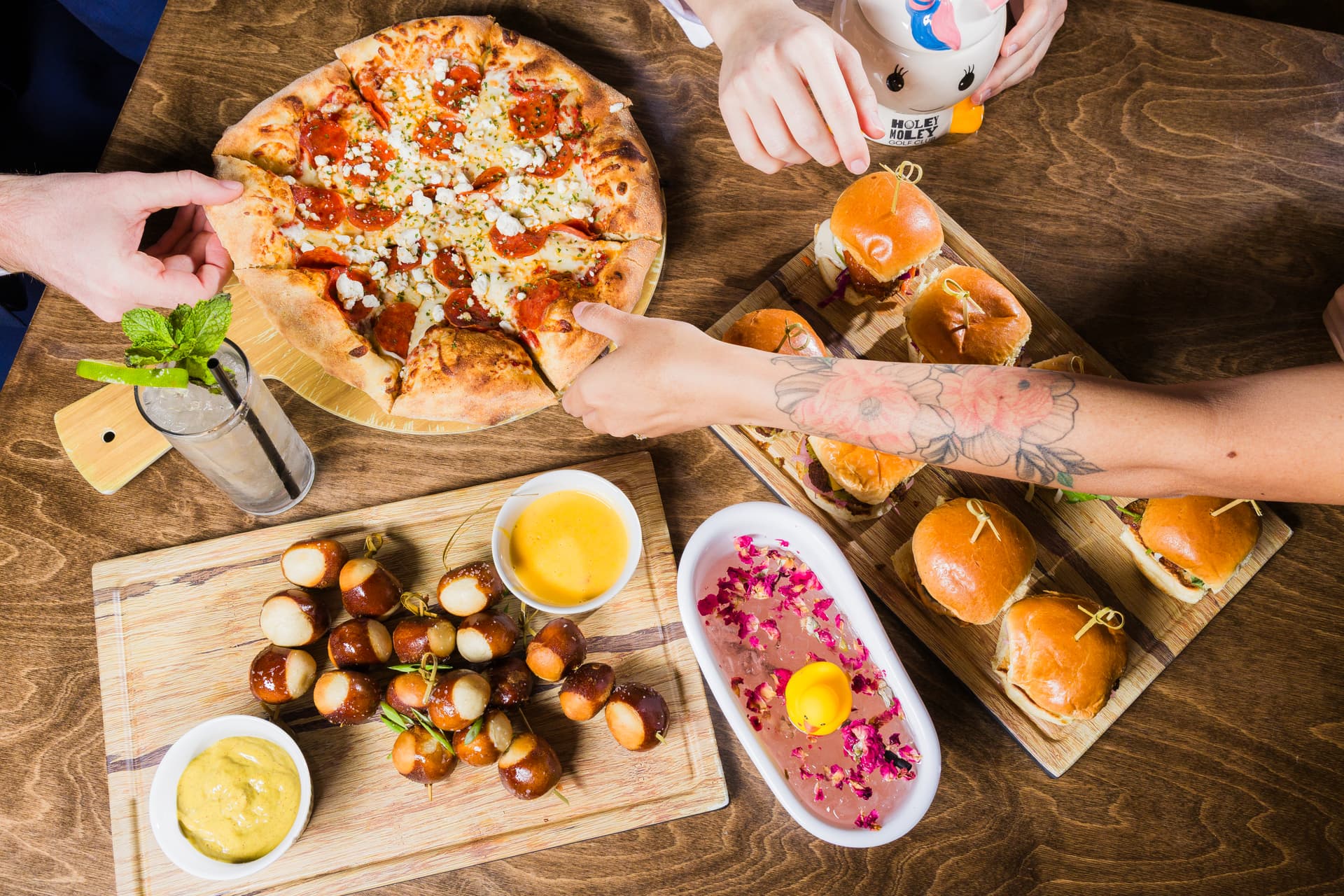
For the Holey Moley shoots, I coordinated 7 models across a single shoot day. We booked enough people to create visual diversity—so the same faces wouldn't appear across every page of their website—while keeping the group manageable for efficient shooting.
Step 4: Maximize Your Shoot Day with Smart Scheduling
A well-planned shoot day can produce content for multiple campaigns simultaneously. A poorly planned one burns through your budget in half the time with half the output.
Control the Environment
This is non-negotiable for styled shoots: carve out dedicated time where the photographer has full control of the space.
For the Holey Moley shoots, we shot in the morning before the venue opened to the public. This gave us:
- No background distractions — No random patrons walking through our carefully composed shots
- Full access to every area — We could set up lighting, move furniture, and stage scenes without working around an active business
- No time pressure from operations — We weren't racing to finish before the lunch rush showed up
- Clean, controlled lighting — I could set up off-camera flash and modifiers without worrying about tripping a customer
If you're shooting at your own business location, close the space (or a section of it) for the shoot. If that's not possible, schedule it during your slowest hours. The 2-3 hours of lost revenue from closing early is a fraction of what you'd spend reshooting because a random customer walked through your hero shot.
Two Shoots in One Day
Here's a strategy that can double your content output without doubling your budget:
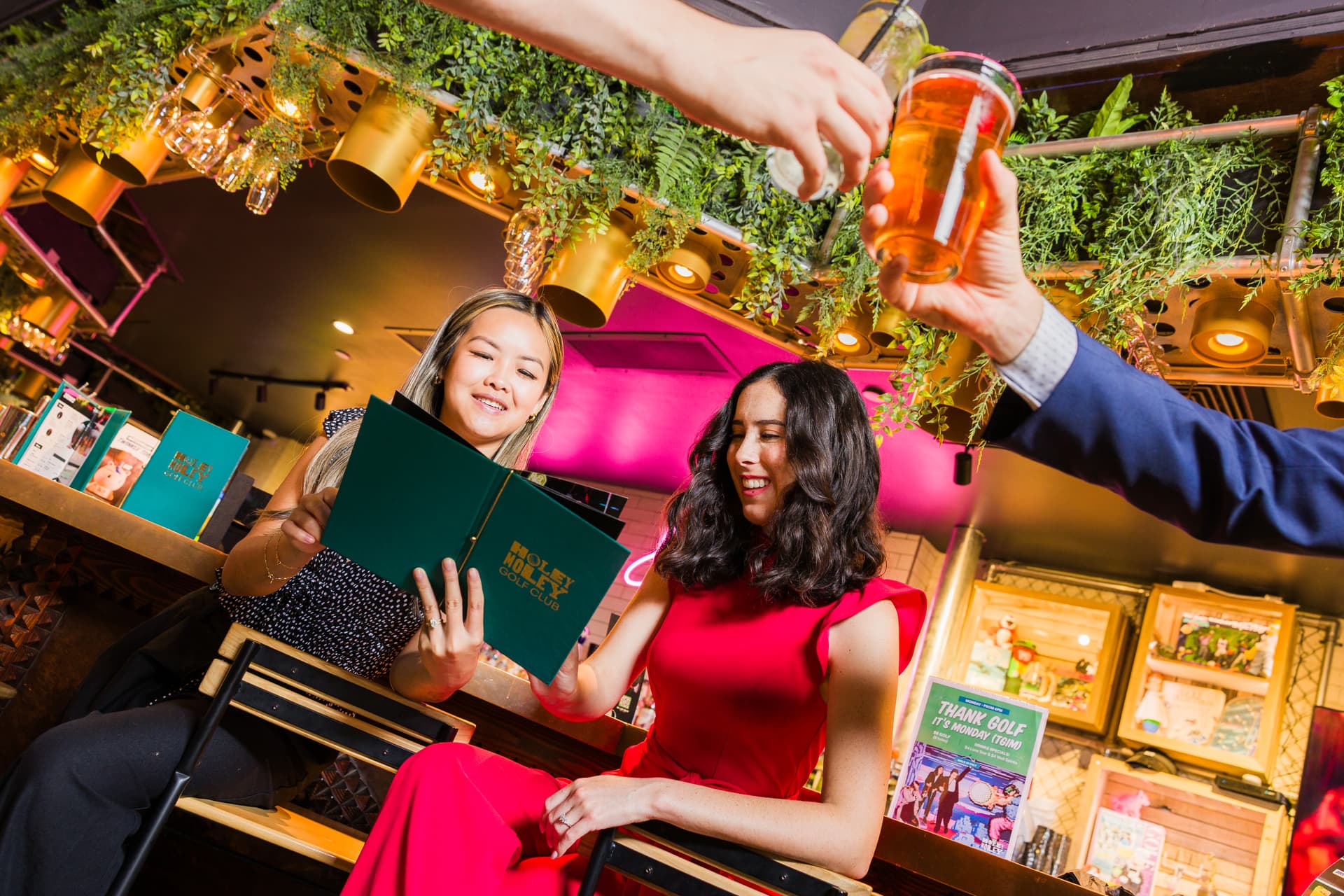
For one of the Holey Moley sessions, we had each model bring two outfits: one more polished and corporate-inspired, and one casual, "out with friends" look. This let us shoot two distinct content libraries in a single day:
- Corporate events page — Models in business casual, networking, having team-building moments over mini golf
- Birthday/bachelorette/social page — Same models in casual outfits, laughing, celebrating, playing competitively
Because we had 7 models total, we could shuffle the groups between the two concepts. The people featured on the corporate page weren't the same grouping as the birthday page, so it didn't look like the same photoshoot recycled across the site.
The math: One shoot day, 7 models, 2 outfit changes each = two full content libraries with distinct model groupings. That's the kind of efficiency that makes marketing directors very happy.
Step 5: Think About Lighting Before You Think About Anything Else
This is the photographer-specific insight that most planning guides skip, but it's one of the biggest factors in whether your photos look professional or amateur.
Natural light changes throughout the day. A space that looks incredible at 9am might be harsh and unflattering at noon. If your shoot runs from 8am to 2pm, the light is going to shift dramatically—and that affects consistency across your image set.
My approach: I scout or review the space before the shoot (either in person or via photos/video the client sends) and build the shooting schedule around the light. We'll hit the naturally bright areas first when they look best, then move to spaces where I'm supplementing with off-camera flash as the natural light shifts.
For interior spaces like Holey Moley—where the lighting is primarily controlled (neon, ambient, venue fixtures)—this is less of a concern. But for any shoot with windows, outdoor areas, or mixed lighting, the time-of-day plan matters enormously.
For marketing managers: When your photographer asks "can we start 30 minutes earlier?" they're not being difficult. They're trying to give you the best possible light for your hero shots.
Step 6: Plan for Content Longevity
The best brand photoshoots produce images you can use for 6-12 months—not just next week's Instagram post.
A few ways to build longevity into your shoot:
- Avoid ultra-trendy styling that will look dated in 3 months. Classic-with-a-twist ages better than full trend.
- Shoot horizontal AND vertical for every key setup. You'll need both orientations across different platforms and use cases.
- Get detail shots and texture shots alongside the hero images. These become backgrounds for graphics, email headers, social media filler—the unglamorous workhorses of your content calendar.
- Capture a variety of emotions and energy levels. Not every photo should be peak excitement. You need calm, contemplative, focused, celebratory—different moods for different messages.
- Leave negative space in some compositions. Your design team will thank you when they need room for text overlay on a website hero or an ad.
The Planning Checklist
Here's the condensed version of everything above. Save this for your next shoot:
1-2 Weeks Before
- Define where photos will be used (website pages, social, ads, print)
- Build shot list with must-haves and nice-to-haves
- Create or share brand style guide / mood board with photographer
- Book models (or confirm employee participants)
- Coordinate wardrobe—align with brand colors and multiple outfit changes if targeting multiple campaigns
- Schedule the shoot during off-hours if shooting at a business location
3-5 Days Before
- Photographer scouts or reviews the space for lighting and logistics
- Finalize shot list and shooting schedule with photographer & models
- Confirm model wardrobe, hair, and grooming details
- Prep any props, products, or branded materials needed on set
- Assign a point person from your team for day-of creative decisions
Day Of
- Arrive early for lighting setup (photographer needs 15-30 minutes before talent arrives)
- Quick walkthrough of shot list with team before shooting starts
- Shoot hero images first (when energy and styling are freshest)
- Outfit changes and group shuffles between setups
- Capture B-roll and detail shots between main setups
- Review key shots on camera with the marketing team during the shoot (not after)
After the Shoot
- Gallery delivered within 7-14 business days (depending on scope)
- Images organized by use case / campaign if discussed in advance
- Full commercial usage rights included for all delivered images
The Bottom Line
A brand photoshoot is only as good as the planning behind it. The photography itself—the lighting, the composition, the editing—is the easy part (for a professional, anyway). The hard part is making sure every shot serves a purpose, every dollar spent on models and production translates to usable content, and the final gallery gives your team what they actually need to execute their marketing plan.
When you nail the planning, the shoot day is fun. The gallery is useful. And your marketing team has months of content instead of a folder of pretty pictures nobody opens.
Planning a brand photoshoot for your company? Let's start with a creative brief—I'll help you build the shot list and handle the production logistics so your team can focus on the creative vision.
Related:
- Brand Photography & Company Headshots: The Real Guide
- How Much Do Corporate Headshots Cost in Austin?
- Branding Photography Pricing
- View Branding Portfolio
Ready to elevate your brand? View Brand Photography Services | Get in Touch